Héctor Rasgado-Flores, PhD, professor, Department of Physiology and Biophysics.
Author Page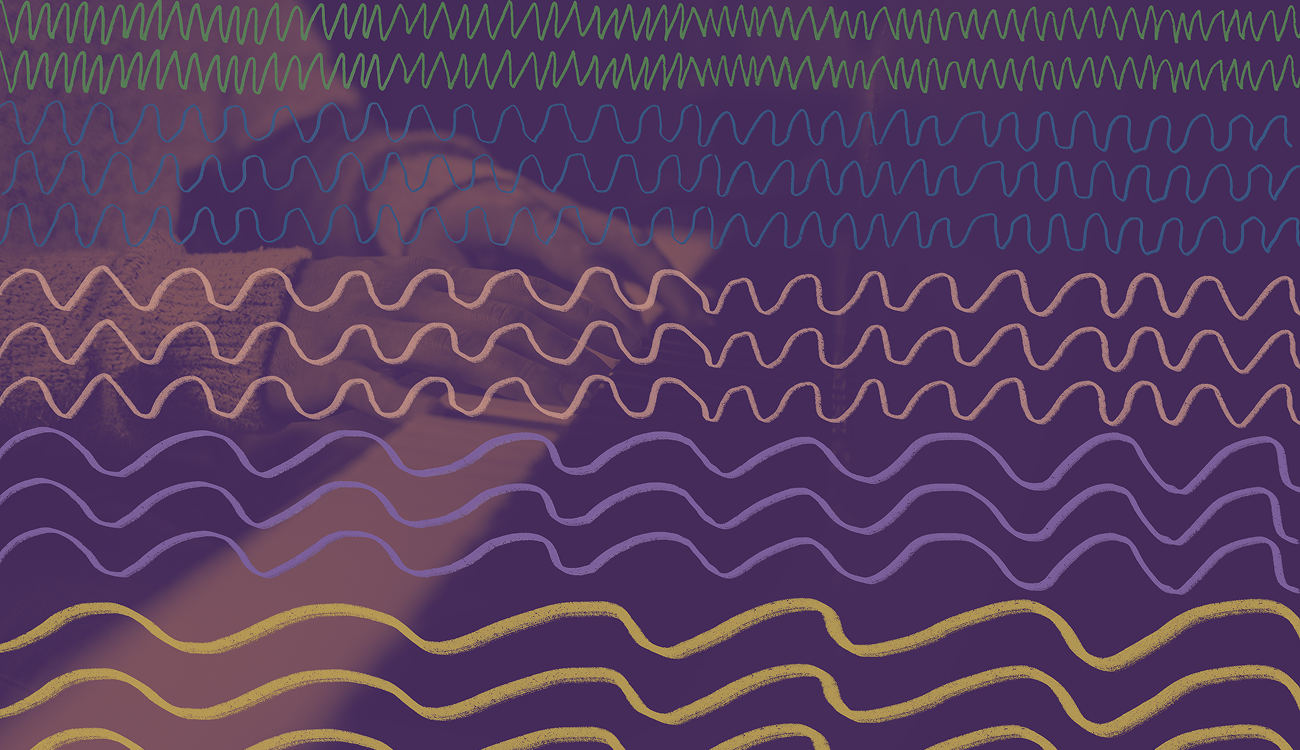
A Little Brain Music
Illustration by Kelly KnagaScience & Technology
Exploring the intersection of music and health care
Certain kinds of music make us happy and less stressed, while others make us sad or scared. But why is that?
Music can change your brain. My professional life as a scientist and composer/pianist has led me to research at the intersection of music and health care. I want to understand how music affects the brain’s organizational coherence and flexibility — the actual mechanisms at work — and to harness those mechanisms for therapeutic healing.
In my work with dementia patients in a Lake Forest adult-living community, for example, my collaborators — including RFU psychology professor emeritus John Calamari, PhD — and I have shown that exposure to a string quartet performing familiar, pleasant music provides more than just a soothing interlude. The music significantly increases patients’ self-awareness and capacity for communication. We hypothesize that pertinent music can gently guide the brain to proper activity, timing, flexibility and coherence, thereby facilitating communication. Our future research will focus on testing this hypothesis.
The brain’s organization, timing, coordination, flexibility, handling of predictions and coherence are at the heart of my work into the ways music can heal. The brain is always laboring to make sense of a constant barrage of incoming data by predicting, filtering, modifying and simplifying information.
Music doesn’t just improve mood; it may also help people with neurological conditions, such as epilepsy and Parkinson’s disease. In these conditions, the brain’s timing system is disrupted. Brain cells either fire too much at once, as in epilepsy, or become stuck in rigid patterns, as in Parkinson’s disease.
Certain types of structured music are particularly beneficial for epilepsy due to their pertinent harmonic, pitch, melodic and rhythmic patterns. It has been shown that patients who listened to the first movement of Mozart’s Piano Sonata No. 16 in C Major, K.545, during and after seizures experienced a reduction in the frequency and intensity of their seizures. The effects endured beyond the listening sessions, indicating ongoing changes in the brain. We hypothesize that the sonata’s pertinent structure helps stabilize the brain’s neural dynamics. Variations in that structure — changing the rhythm or the key, from major to minor, for example — might not produce the same effect and could even prove destabilizing. We propose identifying the key characteristics of a musical composition that relate to its therapeutic effect and modifying these characteristics to enhance its therapeutic efficacy. I envision a future where music could be used as a form of personalized medicine, carefully matching each person’s unique characteristics and needs.
My engagement as both musician and scientist — I studied medicine, piano and composition simultaneously at the National Autonomous University of Mexico and began conducting at age 15 — as well as my position at RFU give me a rare perch from which to explore these systems. I also keep my own musical brain active, composing and performing.
Modern imaging can identify a musician’s brain by its thicker corpus callosum, connecting right brain and left, and other enhanced areas of gray matter. The architecture of the brain changes. That’s amazing.
Sound Advice
What does the moment of conception sound like? What sounds are evoked by the chemical elements that make up our world?
These questions are asked and answered in two of Dr. Héctor Rasgado-Flores’ many musical compositions. The 13 movements of the “Body Notes” piano composition describe human physiology from “Negentropy” (life’s beginnings) and “Beating” (the human heart) to “Apoptosis” (aging and death). His suite, “The Elements,” is made up of 14 short piano pieces, each describing the properties and uses of a chemical element. Often, he dedicates movements to people whose work he admires — among them nine RFU colleagues. Give them a listen:
Commissioned by the American Physiological Society, “Body Notes” uses music to describe various aspects of human physiology. Watch the music video.
“The Elements” celebrates 14 chemical elements. Watch the music video.
Published July 1, 2026