Marc Jay Glucksman, PhD, director of RFU’s Center for Proteomics and Molecular Therapeutics and professor/discipline chair of biochemistry and molecular biology.
Author Page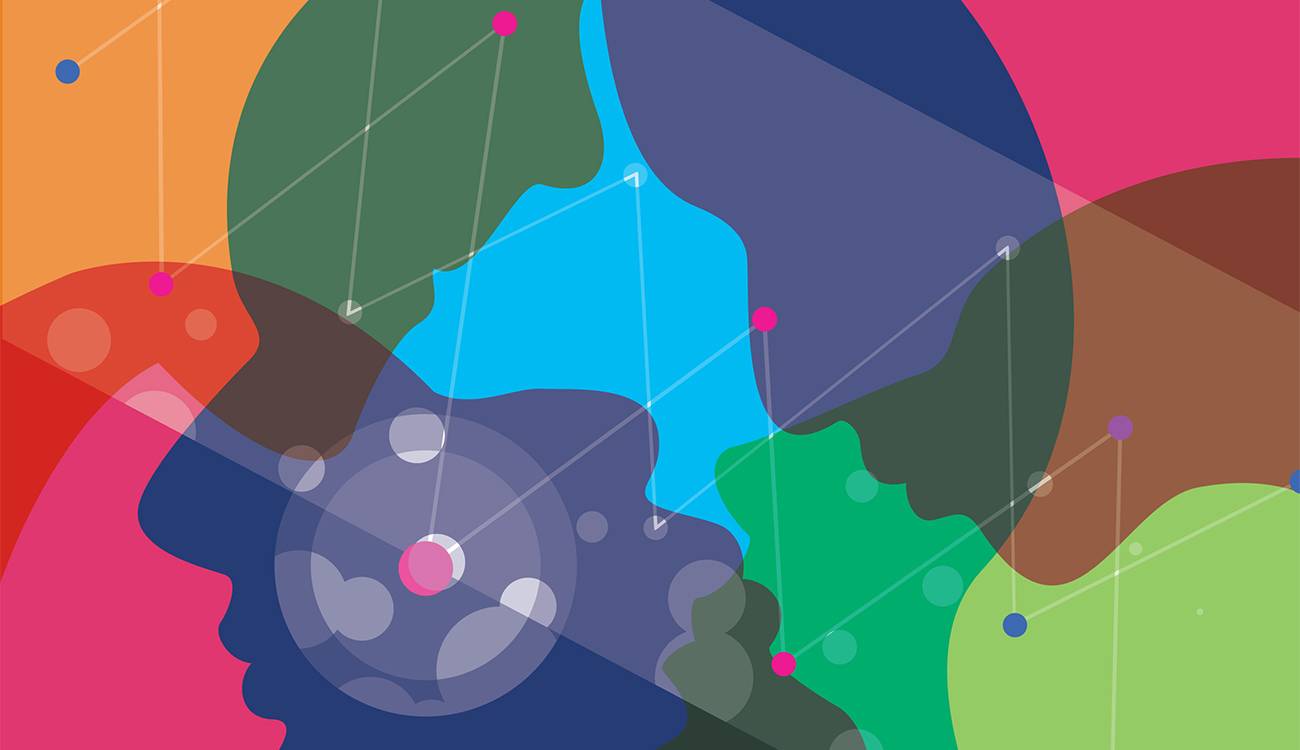
Philosophy 007
Proteomics and the bonds that connect us
Science & Technology
I always wondered why an advanced degree in science is a doctorate of philosophy … until now. After all, much of my career has been elucidating bonds on a molecular level, 10 orders of magnitude (10,000,000,000) smaller than our corporeal and psychic selves. Our laboratory has used X-rays, magnetism, supercomputers, AI and virtual reality to explore molecular bonding. The theme that binds together our explorations is proteomics: the study of all proteins and their variants involved in health and disease. To this end, we aim to discover specific biomarkers that can be used for diagnosis, prognosis and tailored treatments. We specialize in diabetes, and neurodegenerative and neuropsychiatric disorders.
Allow me to apply this reductionist lens to human relationships. We are composed of molecules held together by bonds. Both molecular bonds in peptides/proteins and human relationships elicit energetic interactions leading to greater function and stability. Molecular forces such as hydrophobic, covalent (strong), ionic, hydrogen and van der Waals form bonds to achieve a more stable conformation, such as two hydrogen bonds with oxygen forming water. If we extrapolate to the interconnectedness of human relationships (love, family, friendship and community), one similarly wishes to achieve a stable, lower (emotional/psychological) energy state. Cohesion adds to well-being, as mutual support and a sense of purpose increase our individual and collective resilience. The connections are bonds! (This analogy only goes so far: Proteins and molecules lack consciousness, agency and moral choice, whereas our relationships exude choice, will, empathy and morals.)
Aristotle realized that nature has an inherent teleology. Atoms are meant to form bonds. People, as zoon politikon, are meant to bond through communities to achieve a good and stable life. The dynamic features of both molecular and interpersonal bonding adhere to the dictum of Heraclitus: No one ever steps in the same river twice, for it’s not the same river and they’re not the same person. Relationships are as rivers, constantly flowing and changing, requiring connections and reconnections. As molecular bonds create new structures, Plato saw eros (love/desire) as a force that both drives people together and creates our yearning for higher forms of truth and beauty.
- VAN DER WAALS: Weak electrostatic forces that attract neutral molecules to each other.
- TELEOLOGY: In Western philosophy, teleology originated in the writings and ideas of Plato and Aristotle. It is the belief that things are best explained by their end, purpose or goal, rather than by their cause.
- ZOON POLITIKON: A Greek term used by Aristotle that means “political animal.”
The neurochemistry research in my laboratory is related to neurodegenerative and neuropsychiatric disorders, including the role of neuropeptides and how they are regulated. Neurotransmitters (neural messengers) play a role in behavior and well-being. These “emotional molecules” bind to receptors in both the brain and the body with molecular bonds that elicit downstream responses as “feelings.” Small molecules, such as dopamine and serotonin, and larger neuropeptides, such as oxytocin and endorphins, shape memories, emotions and responses to the world. Thus, binding at various receptor sites underlies the emotions and thoughts that define our unique psychology.
A summary of connections: Molecular bonds hold atoms together, creating the stability, structure and potential for transformation, whereas emotional bonds connect people, providing attachments and capacity for growth and change. Depending on the strength of molecular and emotional bonds, we can experience life as a range of dynamic forming and breaking, from enduring, deep love to transient, fleeting attachments.
Poet Maya Angelou brilliantly connects our chemical and emotional requirements: “We need joy as we need air. We need love as we need water. We need each other as we need the earth we share.” Both are fundamental forces of connection: one in the realm of chemistry, the other in human experience.
Published March 12, 2026