Kim Westerman, MFA, EdD, is a travel and wellness writer, coffee expert and longtime university writing teacher based in Berkeley, California.
Author Page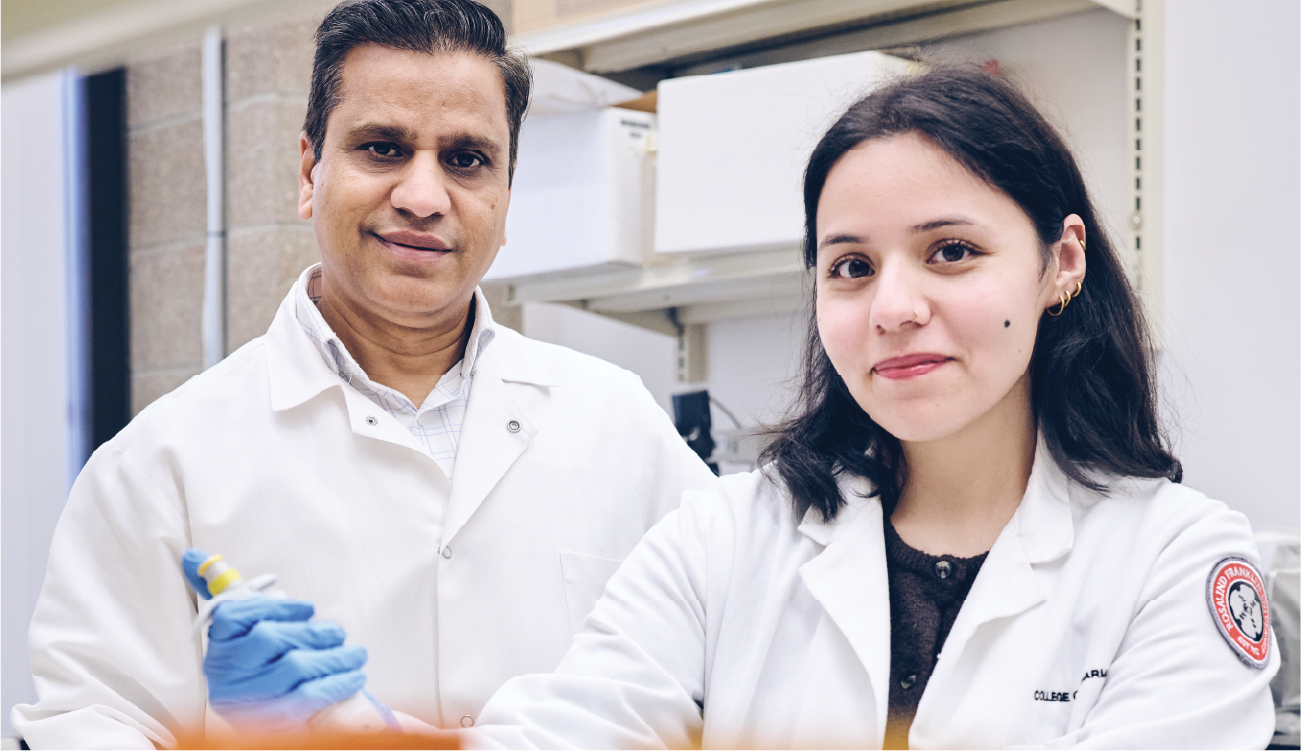
The Heart’s Hidden Pathways
A quest to understand and prevent cardiovascular disease
Photo by Max ThomsenResearch & Innovation
The heart is a system of signals, pathways, pressures and possibilities where biology, behavior, medicine and community intersect. For cardiovascular pharmacologist Mohd Shahid, PhD, the heart is also deeply personal.
Long before he began investigating molecular pathways linked to hypertension, obesity and cardiovascular disease, Dr. Shahid was a graduate student in pharmacology at the University of Delhi in New Delhi, watching his seemingly healthy father succumb to complications from high blood pressure and stroke. His father walked everywhere, never smoked, never drank and remained physically active into his 60s. But underlying genetic predispositions, combined with limited awareness of long-term cardiovascular risk and the challenges of early detection and monitoring, proved devastating. His death altered the trajectory of Dr. Shahid’s career.
Now an associate professor of pharmacology at Rosalind Franklin University, specializing in cardiovascular and metabolic physiology, he studies the heart from a perspective most patients never see — not with a stethoscope or in an operating room, but through molecular mechanisms hidden deep within cells. His work focuses on the molecular and biochemical mechanisms through which stress, genetics, inflammation and diet contribute to hypertension, heart failure and metabolic dysfunction. His research seeks to identify where interventions may interrupt these disease processes.
That perspective exists within a much larger network of cardiovascular care, where every specialty sees a different facet of the same organ. General cardiologists diagnose and manage heart disease, while subspecialists perform a range of procedures, intervening in the service of extending and maintaining their patients’ quality of life.
No single discipline in this complex ecosystem holds the entire picture of the heart.
Researchers such as Dr. Shahid work further upstream. “The work we do in the lab, by and large, does not translate into the clinic immediately,” he says. “But the goal is always to understand disease better, so one day that knowledge can help patients.”
Most recently, Dr. Shahid’s research has expanded beyond cardiovascular disease into the intersection of heart health and metabolism, particularly obesity and diabetes. His lab identified a gene pathway associated not only with blood-pressure regulation but also reduced susceptibility to obesity and atherosclerosis (accumulation of fatty plaque in blood vessels) in experimental models. The finding suggests potential pathways through which cardiovascular and metabolic diseases may eventually be targeted simultaneously.
For Dr. Shahid, the science he pursues is never abstract. His research remains connected to the questions first raised by his father’s illness: Why do some people develop cardiovascular disease despite outwardly healthy lives? How do genetics, environment and lifestyle interact? And how can medicine move from treating disease toward preventing it?
“Medication matters, as do surgical interventions,” he says. “But we should also consider diet, exercise, awareness, prevention and communication among healthcare professionals. No single discipline in this complex ecosystem holds the entire picture of the heart.”
Researchers such as Dr. Shahid help ensure that what begins in an RFU laboratory will strengthen countless hearts far beyond campus walls.
Advance world-class research and innovation to improve community health and well-being for all.
Published October 2, 2026