Sara Skoog started college as pre-med, switched her major to English and has spent 20+ years writing about medical education and health care. Hobbies include baking, crosswords and not watching sports.
Author Page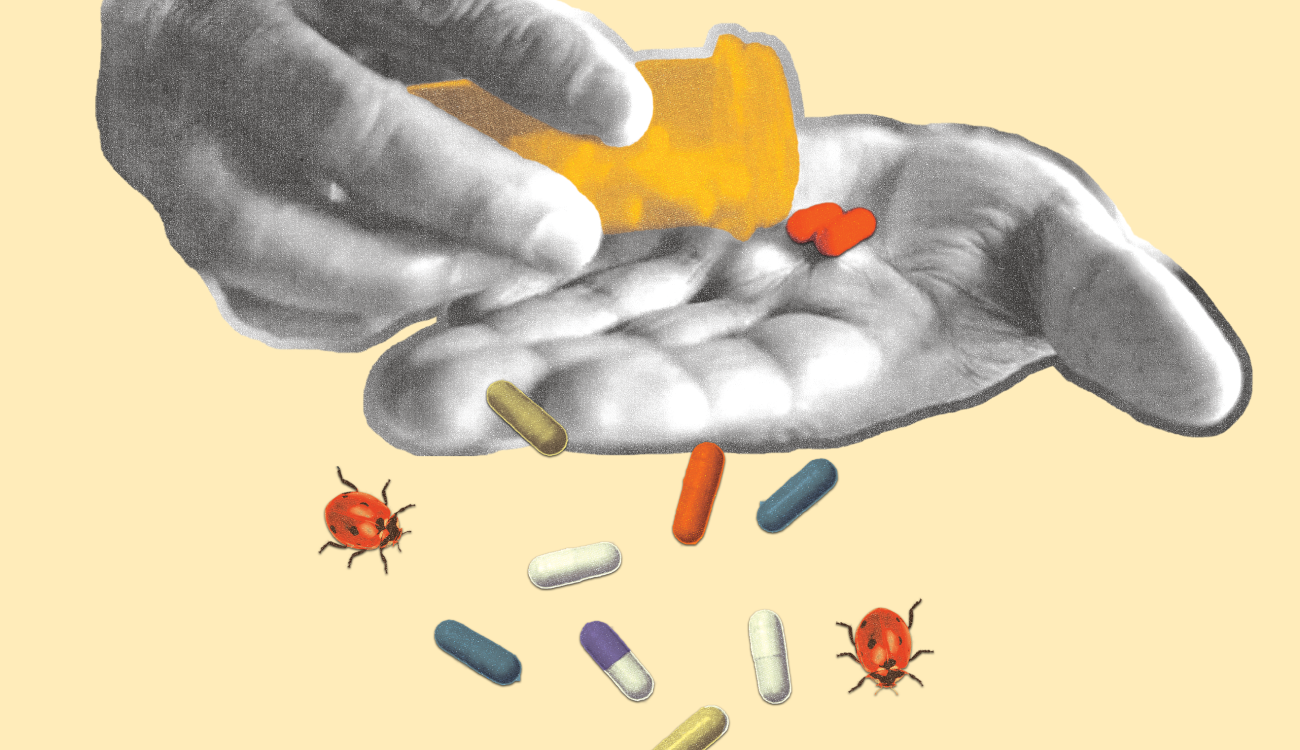
There were bugs in the cup! And the nurse wanted me to swallow them.
At least that’s what the virtual reality (VR) goggles I was wearing told me. The scenario was made up, but my shock and confusion were 100% real. Exactly what I wanted.
I was wearing the goggles during a visit to The Dr. Scholl Foundation Empathy Lab in the College of Nursing. The lab’s director, Lori Thuente, PhD, RN, associate professor of nursing practice, had opened the lab to university employees interested in trying on the same simulation technology that puts RFU students in the virtual shoes of patients with conditions such as PTSD, schizophrenia, or vision or hearing loss. On this particular day, the simulated case was a patient with Alzheimer’s disease.
My dad has Alzheimer’s. I know what I see and feel about Dad’s dementia, and I know what my mom and brother tell me about their feelings, but I had no reference for what life might look and feel like for Dad. When Dr. Thuente’s invitation went out, I signed up, put on the goggles and stepped into my dad’s shoes.
For 15 minutes, I experienced the simulated patient Beatriz’s dementia as it progressed from forgetting names, to getting lost in a grocery store, to becoming less engaged with those around her. (All things my dad has experienced.) I could see how Beatriz viewed life and the people around her, and I could hear her thoughts. She was afraid. She was suspicious, paranoid even. She could hear people talking, but the voices were muffled, as though they were talking with their mouths closed — and that’s how the mouths appeared on Beatriz’s family members. Blurred out, lips not moving. Chilling.
Which brings me back to the bugs. As Alzheimer’s progresses, hallucinations are common. Through the VR goggles, a nurse smiled and said it was time to take my medication. But when I looked down, I didn’t see pills in the cup. I saw bugs. I, as Beatriz, made no move to take the pills despite repeated urging from Beatriz’s daughter: “You have to take your pills now, Mama.” The bugs were all in Beatriz’s mind, of course, but the daughter and the nurse couldn’t know this. The nurse gently took back the cup, said, “We’ll try again later,” and left Beatriz to nap. Eventually, things grew darker, and voices sounded farther away. The end stage. I took the goggles off.
I debriefed with Dr. Thuente, just as she does with her nursing students when they finish a simulation. We talked about my reactions, what I learned and what we want students to take away from the experience. Like the pill refusal. The daughter and nurse can’t hear what Beatriz is thinking, and Beatriz isn’t talking. They just see she’s not taking her meds. From the outside, it can look like noncompliance. To Beatriz, it’s not about compliance, it’s about fear.
The lesson: Don’t assume you know what a patient is feeling or thinking. Spend some time in their skin. Feel what their lived experience is like. When the goggles come off, it’s over for you. For the patient, it never stops.