
Research Team Awarded $3.4 Million Grant to Address Bone-Stress Injuries in Military Recruits
View Related Pages
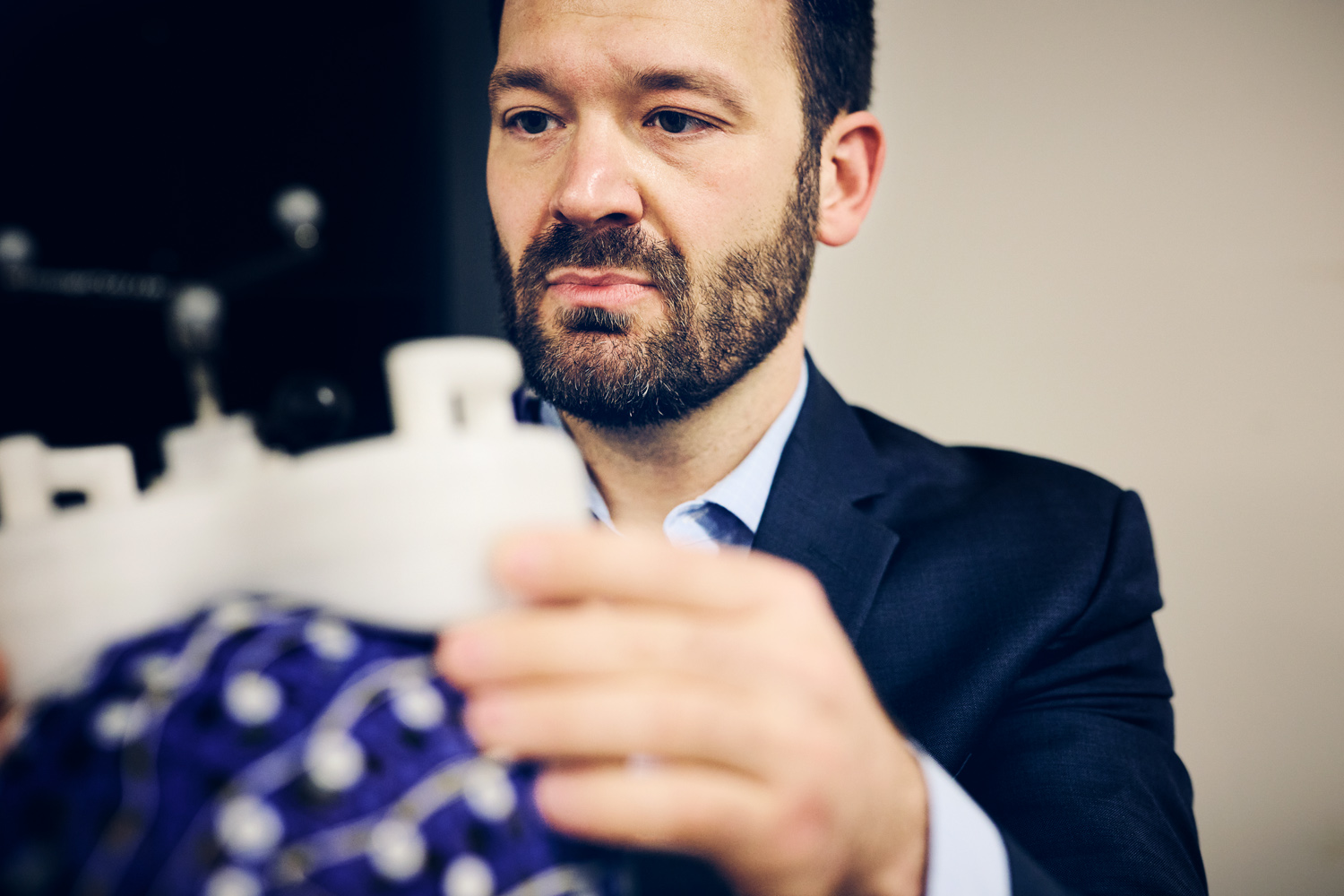
A research team from Rosalind Franklin University (RFU) and Old Dominion University was awarded a four-year, $3,419,895 grant from the U.S. Department of War to improve military-recruit health, readiness and performance, specifically targeting bone-stress injuries.
Bone-stress injuries are a persistent challenge in military training, with 1%–8% of recruits across the military sustaining stress fractures, costing the Department of War about $100 million per year, excluding indirect readiness costs. Because suspected stress fractures often require serial clinical visits, radiographs, MRI and bone scans, there is a strong operational and economic incentive to improve early diagnosis and risk stratification.
Shawn D. Flanagan, PhD, director of the Human Performance Laboratory at RFU’s Center for Lower Extremity Ambulatory Research (CLEAR), and Chris Connaboy, PhD, Batten Endowed Professor of Health Sciences at Old Dominion University, are studying how non-invasive urinary biomarkers could support prevention, conditioning and early rehabilitation strategies before injuries interrupt training.
Their project, “Urinary Proteomic Biomarkers of Adaptive Bone Formation and Stress Injuries in Military Recruits,” will identify, validate and translate urinary protein biomarkers to detect lower-extremity bone-stress injuries (BSIs) before they become severe. The goal is to develop a clinically actionable biomarker panel that could reduce reliance on MRI and other imaging, shorten time to diagnosis, and help identify recruits at elevated risk before a stress fracture develops.
The interdisciplinary research team includes academic and military collaborators with expertise in proteomics, musculoskeletal physiology, bone imaging and military health. The project will use advanced label-free quantitation techniques, longitudinal military recruit cohorts and rigorous analytic validation. It will incorporate gender-specific analyses to ensure broad applicability.
“BSIs are a major challenge to military readiness,” said Dr. Flanagan, an associate professor in the Department of Podiatric Medicine and Surgery and Neuroscience Program of the Dr. William M. Scholl College of Podiatric Medicine and the School of Graduate and Postdoctoral Studies. “By combining cutting-edge proteomic methods with access to large, well-characterized military cohorts, we aim to create a biomarker panel that safeguards recruits and enhances operational performance.”
The grant, from the U.S. Department of War’s Peer Reviewed Medical Research Program (PRMRP) Technology/Therapeutic Development Award mechanism, begins September 1, 2026.