College of Nursing
View Related Pages
Laura Reizine, RN, DNP, CRNA
 Laura Reizine, RN, DNP, CRNA
DNP Nurse Anesthesia
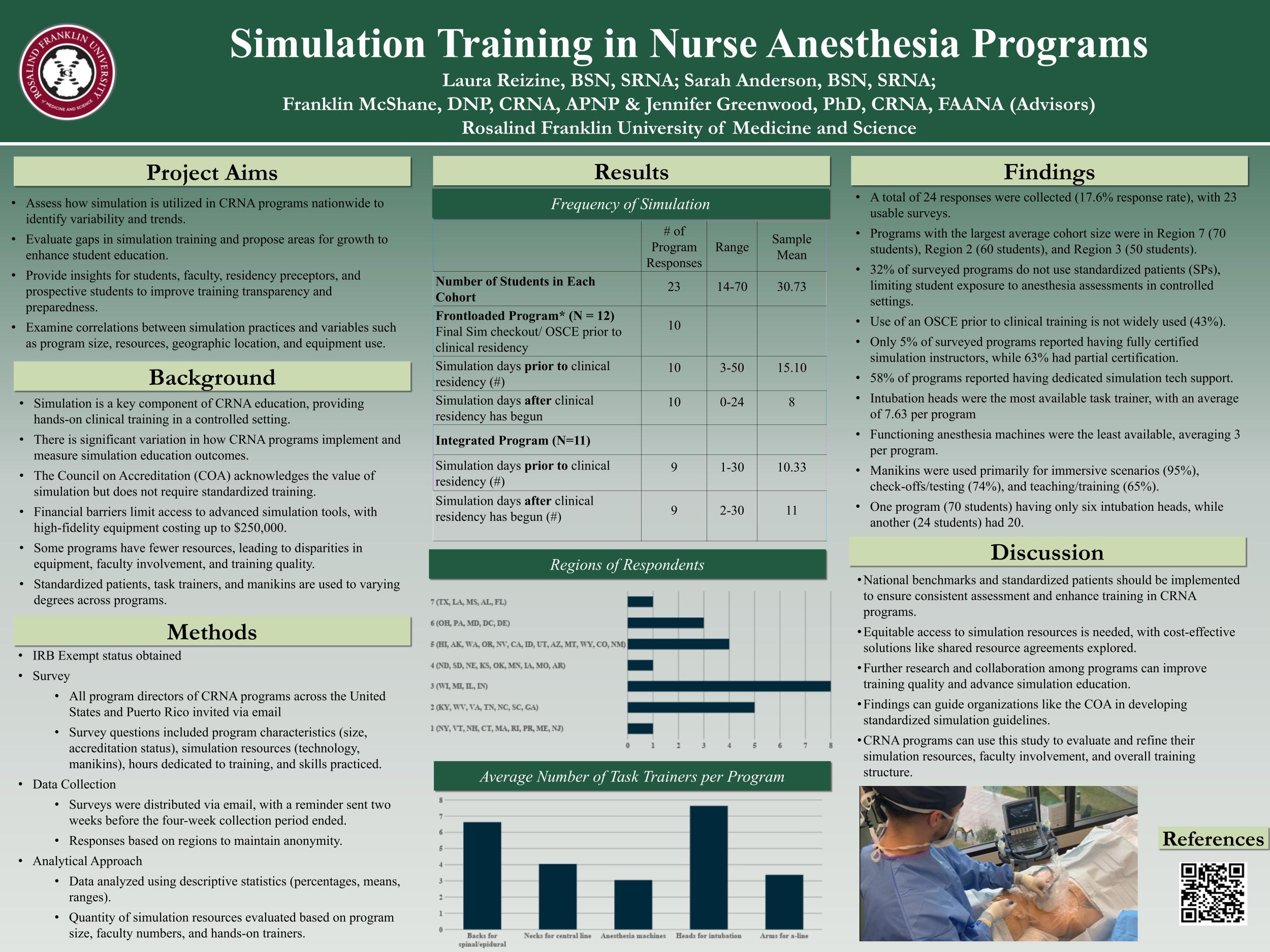
Simulation Training in Nurse Anesthesia Programs
Project Category: Original Research
Project Team: Laura Reizine, DNP, CRNA, Sarah Anderson, DNP, CRNA, Franklin McShane, DNP, CRNA, APNP & Jennifer Greenwood, PhD, CRNA, FAANA (Advisors)
Abstract
Background: Simulation training in nurse anesthesia programs improves clinical performance, communication, and interprofessional teamwork. However, there is no required standard for simulation training, leading to significant variability across programs. This research aimed to assess how simulation is utilized in CRNA programs nationwide.
Methods: An observational study was conducted using survey methodology, and disseminated to nurse anesthesia program directors via email. Surveyed topics included the number of simulation days before and after clinical residency in both front-loaded and integrated programs. They also reported on the availability of high-fidelity manikins, ultrasound, task trainers, anesthesia machines, technology support, and faculty involvement. Descriptive statistics were used to report the data.
Results: Findings revealed that simulation is used to prepare student registered nurse anesthetists, offering a range of technical and soft skills that vary between programs. Faculty participating in simulation per program ranged from 1-9 people, and 18 programs (94.7%) were equipped with high-fidelity manikins in simulation training. Quantitative findings showed wide variation in resources, simulation days, and faculty involvement.
Conclusion: Due to the wide variation in how simulation is used in nurse anesthesia programs our findings highlight the need for establishing benchmarks to ensure consistent and high-quality training, improved preparedness, and confidence of future CRNAs.