
Chicago Medical School
View Related Pages
Paige Arneson-Wissink
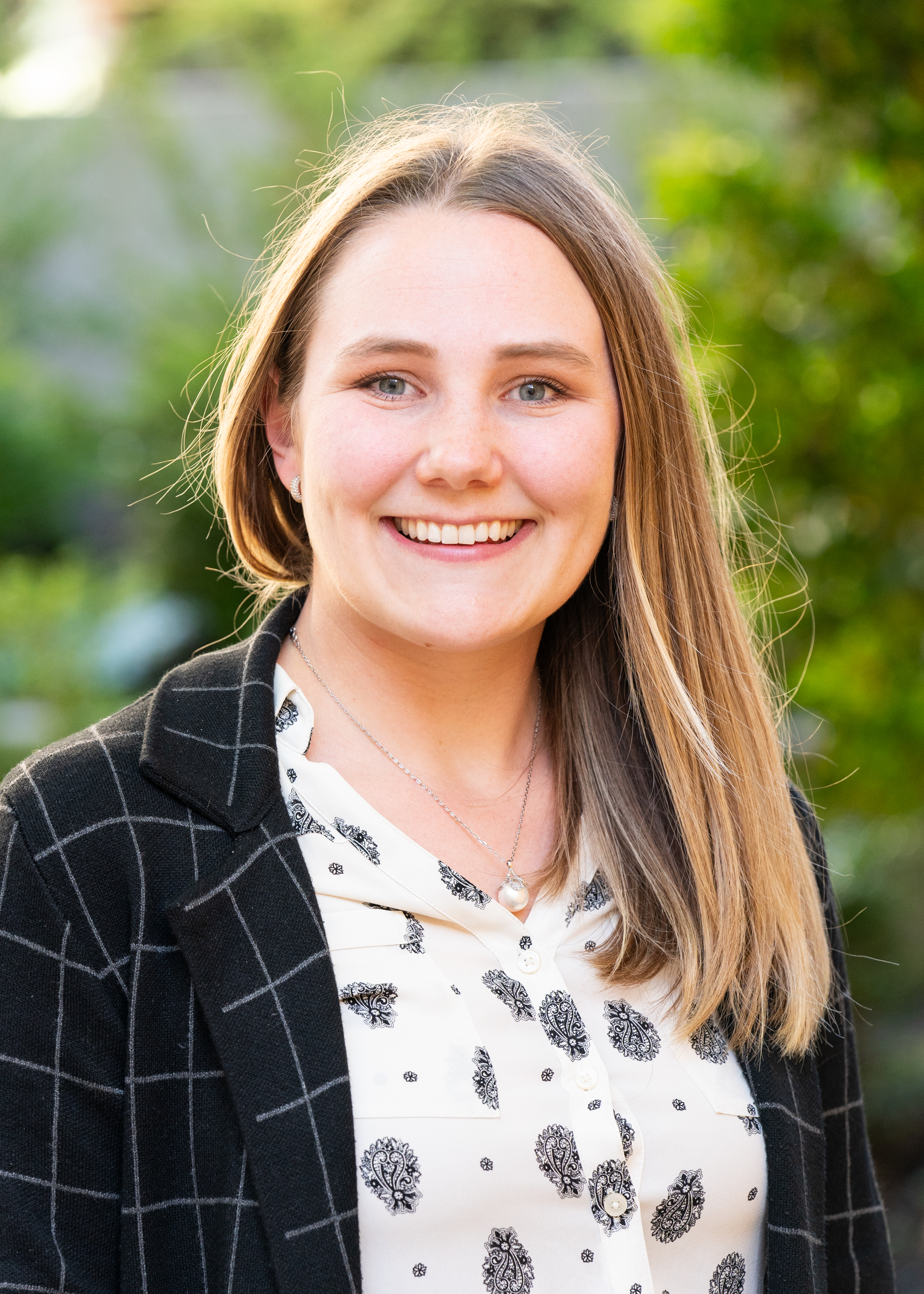 Tell us a little bit about yourself and how you got to where you are now- your academic background and personal motivation that led you to pursue this path.
I grew up in Rural Wisconsin and became interested in biology in high school when we learned about mendelian genetics, at the time I didn’t really know what career paths I could have in science (I knew I didn’t want to be a physician). I went to college at a small, liberal arts, state school, and in my Freshman year, my Biology advisor asked me to assist a Senior student with their capstone research on the population dynamics of Paramecium, tiny single-celled organisms that have a symbiotic relationship with photosynthetic algae. At the time it was a dream job (I was looking at these little creatures under a microscope for 4 hours a week!), in reality, I was mostly washing glass slides and coverslips. Regardless of the dishwashing, I was inspired to find other research opportunities. I did a summer research internship at the Mayo Clinic and studied measles virus’ membrane proteins (also did my first western blot and looked at mammalian cells under bigger, fancier microscopes!). At this point I had decided that I wanted to get a PhD and that I was pretty sure I wanted to be in academia so I could teach (I was a TA as an undergrad and loved teaching others about biology). When I started my PhD at Mayo, I did my first rotation in a cancer cachexia lab and built a really solid relationship with my mentor, who was supportive and encouraging while I was feeling totally overwhelmed with the start of grad school. It was one of those lightbulb moments where it just felt like the right research path for me when I realized I could study cancer from a systemic perspective. My PhD experience was overall very positive, largely due to the support I got from my mentor and lab mates, though my last 1.5 years were finished in the peak of the COVID pandemic. After having lived in Wisconsin/Minnesota my whole life, my husband and I moved cross-country to Portland, OR for my postdoc. I continued to study cancer cachexia as a postdoc, and questioned whether I was cut out for academia many times. My postdoc was challenging, but I kept doing the science that felt fulfilling, and found lots of opportunities to mentor students, which brought me a lot of joy. After I was awarded a K99 grant, staying in academia really felt like it could be a reality (and now it is!).
Who are the people who have had an impact on your choices and your career?
My classmates from grad school are some of my best friends and biggest supporters. For 5ish years we went through everything together and that really builds a deep understanding of each other that is hard to replicate. They have been instrumental in encouraging me to keep going when I want to give up.
My parents and sister have also shaped my career a lot. My parents both had careers in geology before having children, and they always let us be curious about the natural world. When we were very young, my sister and I built a “museum” of natural history in our basement where we also occasionally conducted science experiments. My sister started her PhD in physics about two years after I started mine in biology and we rely heavily on each other to get out our science-related frustrations.
What are your future aspirations?
I dream of being an amazing mentor and educator to future scientists, creating a culture in my lab where everyone feels welcome, and tearing down the barriers in academia that suppress the success of women and other minorities.
Tell us about one of your biggest professional successes.
I was awarded a K99/R00 grant from the National Cancer Institute through a special funding mechanism for postdocs early in their training. What was most exciting about this accomplishment for me was that I had applied for fellowship grants 3 times as a grad student and had never even been close to being funded (2 not discussed, 1 with a bad score). When I applied to the K99/R00 I wrote my application about a project I had started completely from scratch as a postdoc so it really felt like it was “mine.” Despite this, I never really believed it would actually get funded. My jaw was on the floor when I saw that my score was likely to be funded. It took 8 months from being scored to being officially awarded, and that whole time I kind of didn’t believe the grant was actually going to be awarded to me.
Can you share one of the challenges or obstacles that you had to overcome?
Starting a postdoc during COVID was very difficult for me. I was far away from my family and friends from grad school, and Oregon was still experiencing pretty severe restrictions on public gatherings when I moved there. I was 1 of 2 postdocs in my department and there weren’t a lot of opportunities for me to meet postdocs outside our department because of the COVID restrictions. I was part of a great lab, but still felt siloed, like I didn’t have peers to talk to about the challenges of being a postdoc. As gathering restrictions started to lift, I got involved with the Postdoc Society and Postdoc Union at OHSU. Both of these helped me build a peer network and provide service to my research community, which was very fulfilling.
How do you balance your personal and professional life?
Every day I try to be a little bit better at finding a balance and some days go better than others. I try to be really present for whatever is in front of me, whether it is personal or professional. I dedicate time at home with my partner and dog, where my work stays put away. If I need to work on weekends, I try to set really clear times when I’ll be working so that the work doesn’t continue to seep into personal time. This was a really difficult habit to establish, especially after COVID, when I was spending most of my days writing my thesis and PhD papers at home. Living in Portland helped a lot with this because we spent most of our weekends camping, and I didn’t have internet or power to charge my laptop, so I literally couldn’t be working while camping. On the converse, when I have a big deadline for a paper or grant, I try to treat myself with respect, knowing that work will dominate my time for a while and personal things will need to take a backseat. I also look to my peers for inspiration for new ways I can try to re-balance professional and personal time!
In your professional journey so far, have you faced prejudices as a woman? What are your thoughts on the gender gap in science/STEM?
This is a difficult question to answer because I think minoritized genders, including women, often become desensitized to the prejudices that do exist in science. There is a lot of data that supports the “leaky pipeline” that describes the attrition of women from the scientific workforce as experience level increases. While it is nice to have data to back up the challenges of being a woman in STEM, it also becomes a psychological battle to know that the System of Academic Science is not built for women (or really anyone from a minoritized group), and to still show up to do the science. There are many times when I’ve been the only woman in the room. I also have lots of joyful memories of being in rooms full of educated women. I am grateful that my male mentors and colleagues have always viewed me as an equal. I’ve also witnessed women “leave science” or make huge personal sacrifices because academic institutions failed to support their needs. I believe that we won’t reach gender parity across all levels of training/experience without structural changes to Academic Science (which I use as a general term, nonspecific to any particular institution) that promote equitable access to parental leave and child care, reliable harassment reporting mechanisms, transparent reporting of salary/startup/grant compensation, and formal mentorship (with acknowledgement for the mentors) specifically for minoritized people in STEM. It can feel discouraging to see the magnitude of change that is needed in STEM, but identifying small ways to be part of the change has been very gratifying for me. I am part of Women in Cachexia, which is a community affinity group supported by the Cancer Cachexia Society. We lead journal club discussions about ways to make science more inclusive, and also host seminars where female scientists discuss their career paths.
What tips or advice would you give to young girls and other women that want to pursue a career in academia and perhaps take on a faculty position?
Find a support network of people who are going through similar career transitions and rely on each other for encouragement, support, and advice. In graduate school, it was easy to build deep connections with my classmates since we all started together and were working on the same timelines. That kind of network is harder to find in your postdoc and beyond. Investing time and effort to find people who are at the same career stage but also share some commonalities in your philosophy, scientific discipline, or identity is really helpful. Now, I am extremely lucky to have 3 other close friends (who started as colleagues in the same field as me) that are all starting their independent research labs at the same time as me. We are all women navigating different but similar challenges in life and in lab. We have a group chat that ranges from western blot advice hotline, a safe space to rant, place to celebrate our achievements, and sharing pictures of our pets.
What are your hobbies? Any fun facts about yourself that are not on your resume?
Fun fact: I was my PhD mentor’s first grad student, and my postdoc advisor’s first postdoc!
Right now my hobbies are re-establishing native plants in my backyard, knitting, and biking on the Des Plaines Trail! In the winter I enjoy cross country and downhill skiing or really anything outside in the cold, snowy weather!