
View Related Pages
From Aron’s Desk
December 19, 2025
Friends,
The Winter Solstice is upon us. On December 21 at 9:03AM the earth’s tilt will start carrying us back toward longer daylight. I’ve always enjoyed the solstice for two main reasons. First, it is an astronomical holiday everyone can enjoy. I’ll admit it is a bigger deal the farther north or south you live, because the daylight changes are more pronounced the closer you get to the poles. And second, people have been calculating and marking the solstices for thousands of years - I really connect to the ancient science and education of the solstice.
Sorting out the exact time of the solstice is pretty recent and depends on highly accurate measurements of the sun. Even discovering the day of the solstice requires the observer establishing the position of the sun to within one-sixtieth of its diameter or plotting the time of sunrise within 1-2 minutes. That kind of precision required ancient people to build big, sturdy structures to discover and celebrate the solstice. More than five thousand years ago, people built the tomb at Newgrange, Ireland, and oriented it toward the sunrise on the winter solstice. Stonehenge in England, the Goseck circle in Germany, medicine wheels and petraforms in North America, and other ancient sites on every inhabited continent have structures that could have been used to track the solstices to within a day.
As an educator, I like to imagine elder experts teaching the young people of these communities how to use those ancient observation technologies. In my mind’s eye, I see the elders and the next generation gathered at sunrise or sunset, hoping for a clear view of the sun, looking to mark the placement of the sun on the horizon - the search for good data and teaching the next generation to collect and use data are as old as humanity.
Well past the winter solstice, in fact nigh on to the Summer Solstice, we will celebrate the Rosalind Franklin University of Medicine and Science Commencement and our own intergenerational, interprofessional transfer of expertise. I am delighted to announce that Teresa K. Woodruff, PhD will be our commencement speaker this spring. Dr. Woodruff is one of the great scientific leaders in our country. She founded the field of oncofertility and has made remarkable discoveries advancing how we preserve the future fertility of prepubescent girls and young women facing cancer. Along the way, she has made numerous basic science discoveries and mentored countless young scientists and faculty. Some of her mentees are not so young! I came to know Dr. Woodruff while she was provost and then interim president of Michigan State University. She is an inspiring leader and visionary. Her awards and recognitions are TNTC and include the National Medal of Science and election to the National Academy of Medicine. She will be an excellent speaker and is honored and excited to be our commencement speaker.
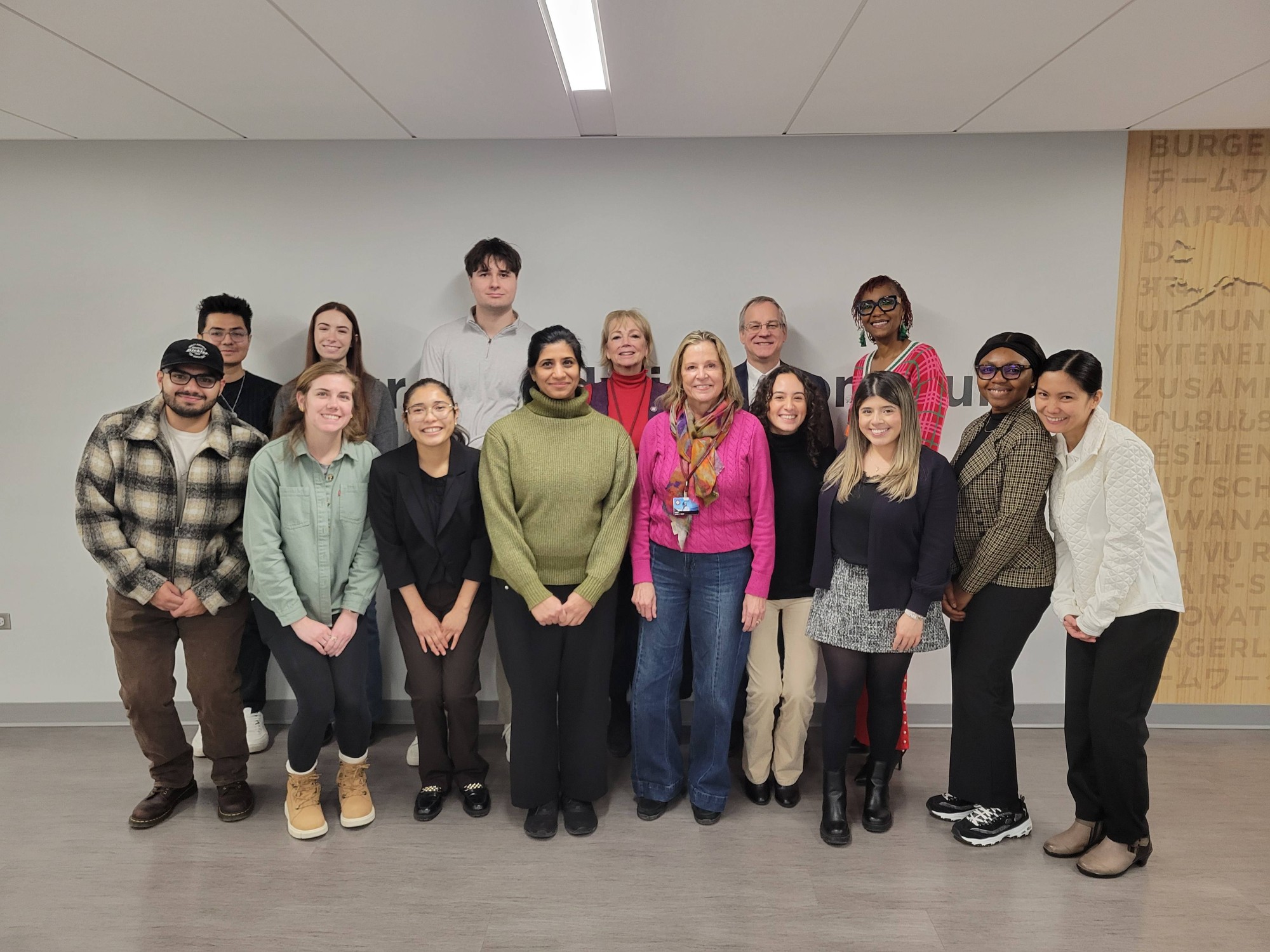
One delight of being president is learning about remarkable and innovative programs of the university. This week, I had the privilege of spending some time with The The Grainger Foundation scholarship recipients, College of Nursing Dean Hopp, and Julia Wold of The Grainger Foundation. As you would expect the students were smart, dedicated, and excited by the work they are doing and the work they will do. The program creates a nursing pathway for students from the area to become nurses through a non-nursing bachelor’s degree from Lake Forest College and a Masters of Science in Nursing for Entry into Nursing Practice degree from RFU. This program combines the strengths of Lake Forest College and Rosalind Franklin University with the vision and generosity of The Grainger Foundation - it is wonderful!
This week’s Town Hall focused on wellness and resilience as we go into the holidays. We scheduled that subject for the last Town Hall of the year on purpose. The holidays can be tough for people, and the last week has been replete with national and international tragedies touching so many of us in one way or another. Rosalind Franklin University has resources for students, staff, and faculty, and I encourage you to reach out if you are struggling or know someone who is. The first step in helping someone who is struggling is simply to be there for them and take their struggle seriously. Usually, the best we can do is be present for each other, and I know the people of Rosalind Franklin University are there for each other and those in need in our community. Thank you for being part of this warm, loving community.
Improving the wellness of all people with you,
Aron
Aron Sousa, MD
President